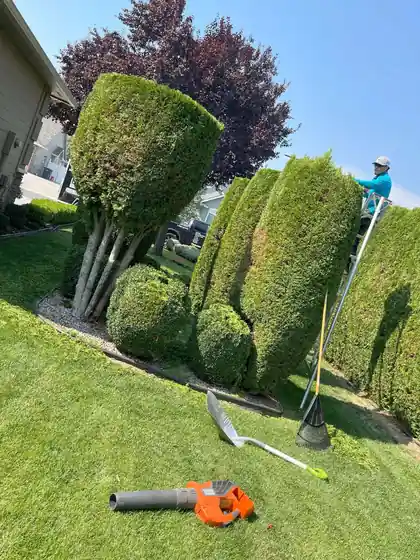
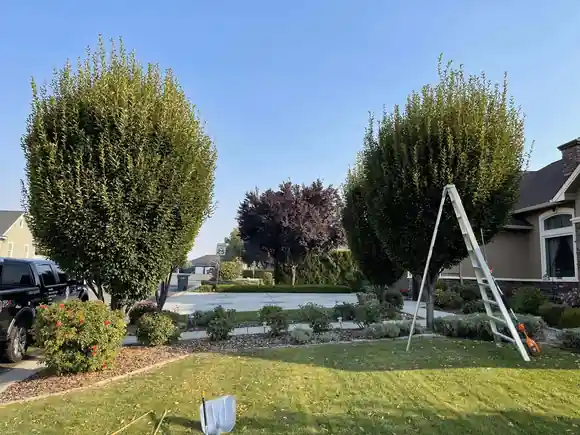
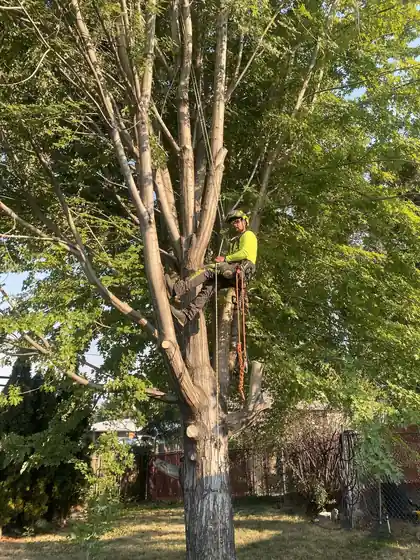
From the bucket
Proper pruning and tree removal in Yakima
Cuts made for the tree's health first, shape second. When a tree is too far gone, we take it down and clean up behind us.
Chapter 01
Topped trees and flush cuts rarely recover
Most pruning damage in Yakima yards comes from one of three things: topping a tree to cut it down to size, cutting flush against the trunk, or letting a limb grow so heavy that it has to come off in one ugly piece. Each one leaves a wound the tree has to fight to close.
Timing matters as much as technique. One homeowner wanted her arborvitae topped. Raul told her this was the wrong temperature for it and that they would die if topped now, and he said he would call her when the weather was right. That is the kind of answer you get from a crew that cares about the tree and not only the invoice.
There are three honest reasons to prune: safety, health and looks. A limb over your roof is a safety job. Dead wood and crossing branches are a health job. Shaping a tree to your yard is the part most people picture. We start by asking which one you are really facing.
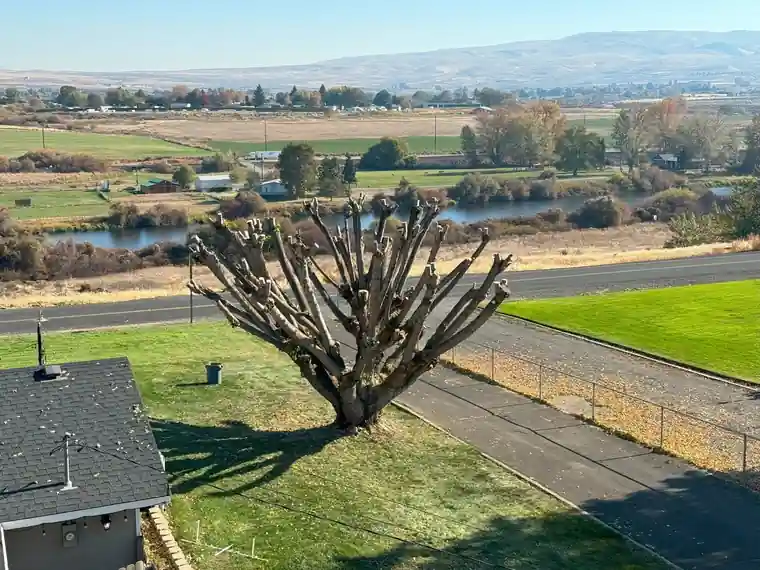
A pollarded tree on a Yakima lawn, shot from the bucket with the river valley and ridges behind it
Ornamental & Fruit Tree Pruning, from the rope and the bucket
We work from tree physiology first: what the species needs, where it heals, and what a cut will cost it. Our climbers use spikeless methods whenever possible, so the trunk is not punctured every time someone goes up to inspect or prune it.
Big limbs come down by bucket truck and rigging, so the work stays controlled. For ornamental trees, you pick the shape. Tall and slender, short and wide, or a custom form. We can also build a residual pruning plan around your property and any specialty trees.
Fruit trees get their own conversation. We talk through pruning methods based on your preferences, your budget and the yield you want, then prune to that plan. When disease, age or storm damage mean removal is the right call, the same crew handles the takedown, the cleanup and the stump grinding.
Chapter 03
When to prune, and keeping it on a schedule
Our general rule from the FAQ: prune deciduous trees in late winter or early spring while they are dormant, which lets wounds heal well and lowers the risk of disease. Flowering trees are different. Prune them right after they flower so you keep next year's blooms.
Some trees want a different season, so ask before you pick up a saw. We also run seasonal tree care packages for Yakima, which means the same crew comes back on a schedule instead of you hunting for a new trimmer every year.
Lavina June knows how that goes. She has a sycamore with five huge outstretched arms that needs trimming yearly. In her words: "Big R came in and did the job in just a couple of hours!"
"Raul and his crew were very professional, responded quickly, and did a tremendous job removing our huge tree. Clean up and haul away was complete, and we are very pleased." Susan E., Google review. Licensed, bonded and insured, WA L&I contractor licence BIGRTRT797KE.
Pruning work from our own jobs
These are photos from real Yakima jobs. No stock, no staging.